
Where to Find the Best Food in Gorakhpur
Published: April 21, 2026
Gorakhpur's Food Scene Doesn't Need a Travel Magazine to Validate It. The City Has Always Known.
Eastern UP has a food culture that moves on its own timeline, unbothered by what's trending in Delhi restaurants or being written about in food journalism. Gorakhpur sits at the confluence of influences, the Awadhi cooking of the west, the Bhojpuri kitchen that shapes this region's daily eating, the specific street food geography of a city that feeds pilgrims, students, traders, and locals simultaneously without any of those groups compromising on what they want.
The best food in Gorakhpur doesn't announce itself. It's in the khomcha near Gita Press at 7 am. The litti chokha that a specific stall near the railway station, has been making the same way for thirty years. The thali that arrives at lunch in the kind of diner that doesn't have a name on the door but has the same regulars every single day.
The Street Food That Defines the City
Gorakhpur street food operates on the logic of Bhojpuri cooking, generous, unapologetic, built around the staples that sustain a working city rather than the delicate constructions that impress a table of food critics.
Litti chokha is the morning and evening staple. Wheat dough balls stuffed with sattu, roasted over coal until the exterior chars slightly, served with roasted brinjal and tomato chokha alongside. The combination is as complete a meal as Indian street food produces, protein, carbohydrate, vegetable, smoke, and the version available at the stalls near the railway area and the bus stand is the honest one rather than the restaurant interpretation.
The chaat here runs differently from Delhi or Varanasi. Gorakhpur's version leans harder on the tangy tamarind, the green chutney arriving in volumes that most chaat outside this region would consider excessive. The aloo tikki is thicker, the filling more substantial. The papdi chaat at the evening stalls near Ramgarh Taal, the lake that anchors the city's recreational geography, is the specific version worth eating before the sun goes down completely.
Bedai and jalebi for breakfast. The combination that eastern UP mornings run on, the crispy fried bread with spiced potato filling, the hot jalebi from the same wok that's been going since 5 am. These are the best food in Gorakhpur moments that don't involve a restaurant booking or a table.
The Restaurants Worth Sitting Down In
The dine-in market in Gorakhpur has developed in proportion to the city's growth as a religious and commercial centre. Gorakhnath Temple draws pilgrims from across UP and beyond, the restaurant economy around it reflects a visitor population with specific food requirements and significant numbers.
North Indian thali restaurants dominate the mid-range. The thali logic in this part of UP is abundance rather than curation, the plate arrives full and keeps arriving full until the request to stop is explicit and repeated. Dal, sabzi, roti, rice, achaar, papad, and whatever the day's seasonal vegetable happened to be. The best versions of this are the restaurants that have been running the same menu for twenty years because changing it would confuse the regulars.
Awadhi cooking appears in the better restaurants, the slow-cooked dal preparations, the dum-style dishes that arrived from Lucknow's kitchen and settled into Gorakhpur's food culture as permanent residents. The biryani here sits between Lucknowi and Bhojpuri in character, aromatic without being precious, substantial without being heavy.
Ramada Gorakhpur: Where the Kitchen Earns Its Reputation
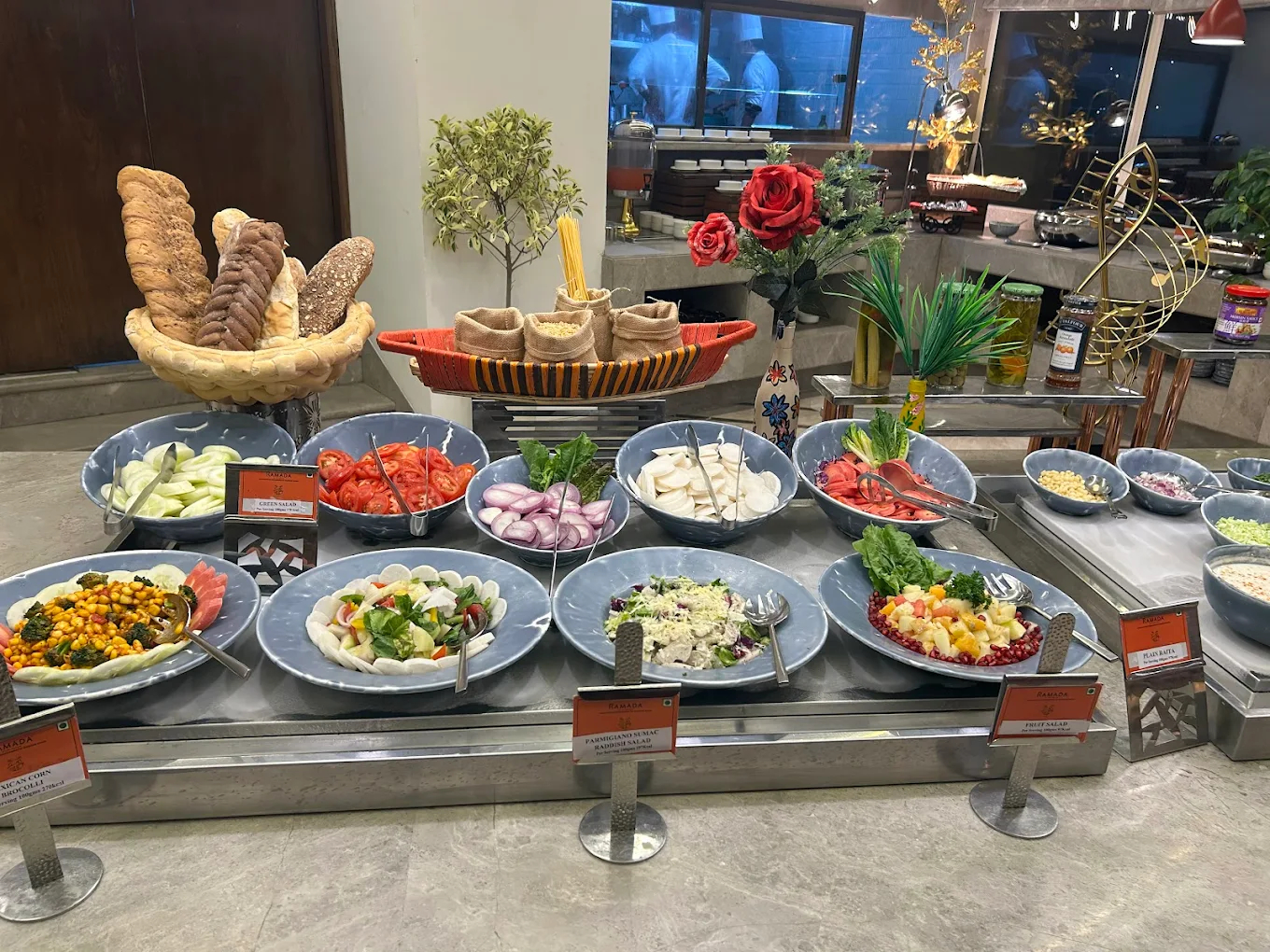
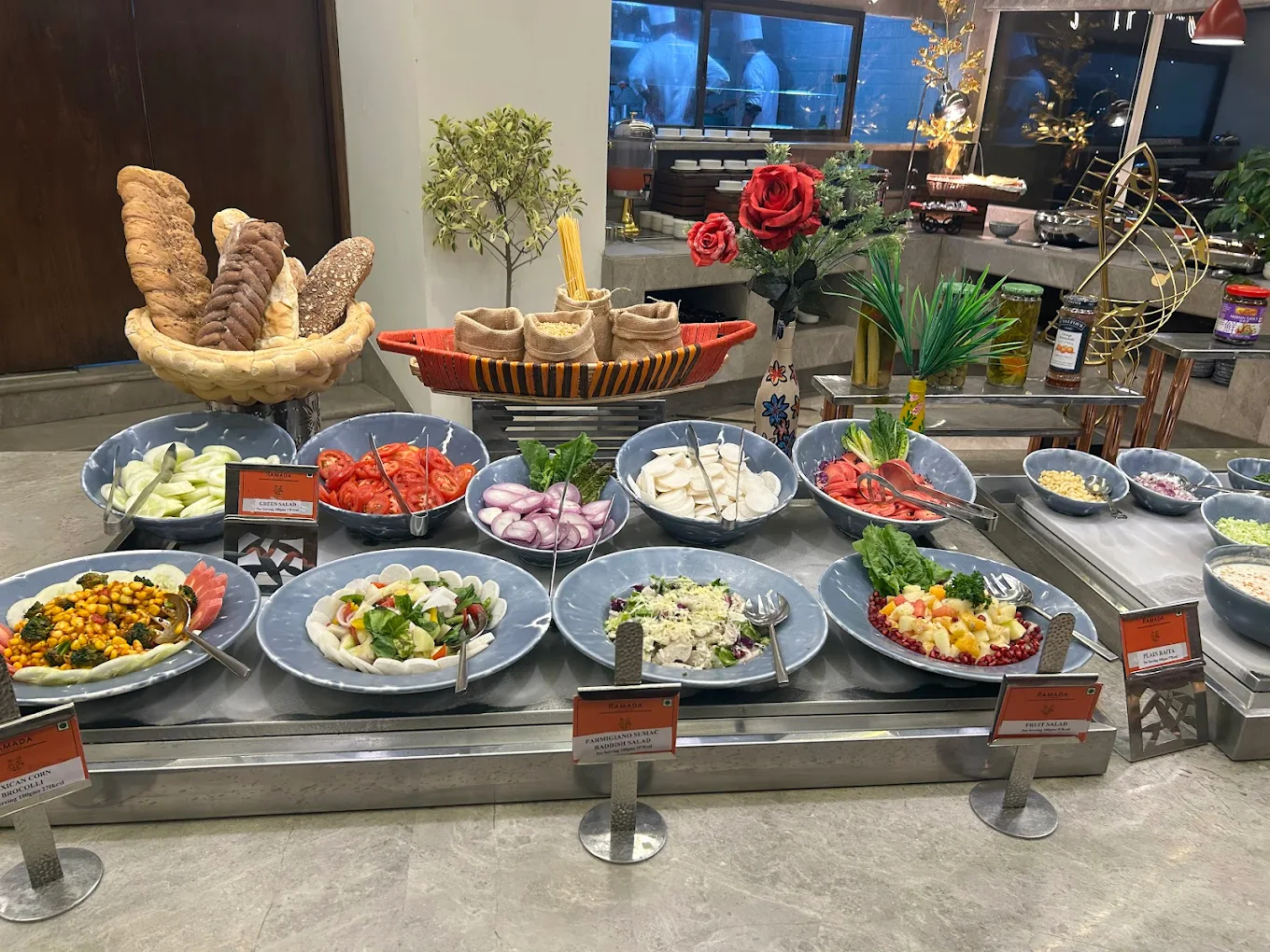
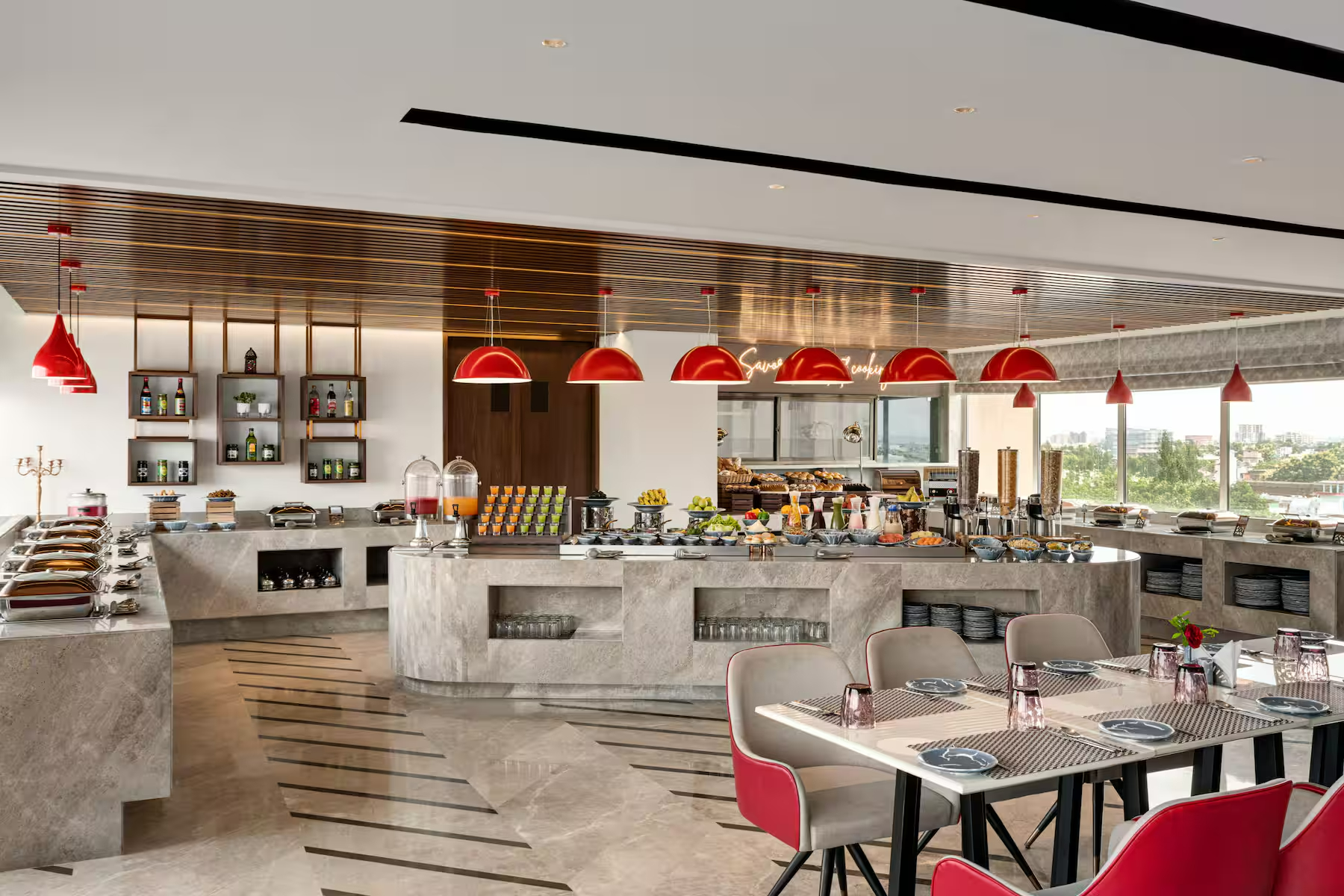
The restaurant conversation in Gorakhpur eventually arrives at Monarch, the main dining room at Ramada by Wyndham Gorakhpur in Saket Nagar. Not because hotel restaurants are inherently better than the city's independent options, but because Monarch is doing something genuinely worthwhile with the range it attempts.
Multi-cuisine with North Indian, South Indian, Awadhi, Continental, across a menu that's broad enough to serve mixed groups and focused enough to execute consistently. The Awadhi preparations specifically earn the attention. The slow-cooked dishes that this cuisine is built on require time and technique that shortcuts destroy, and Monarch's kitchen takes them seriously. The buffet breakfast is included with most room bookings and rated well consistently, strong variety, freshly prepared, the starting point for a day that might involve the Gorakhnath Temple visit or the Gita Press stop or whatever the particular trip is built around.
The dining room handles the corporate delegation, the family on a religious visit, and the solo business traveller with equal competence, which is the mark of a kitchen that's been calibrated for its actual audience rather than the audience the menu design imagined.
The hotel, what surrounds the restaurant:
Rooms: Deluxe, Premium, and Suite categories, that are soundproofed, work desk in every room, modern interiors, consistently described as clean and spacious in guest reviews
Swimming pool: The amenity that makes the Gorakhpur summer manageable for the stay that extends beyond overnight
Gym: The road warrior's requirement, present and functional
Free WiFi and free parking: Baseline operational requirements handled without the surcharge logic that less transparent properties employ
Conference rooms and banquet halls: Up to 500 guests for the banquet capacity, the infrastructure that positions Ramada as Gorakhpur's primary event and wedding venue
Business centre: The document printing, the meeting setup, the corporate infrastructure for the visitor whose Gorakhpur trip is professional rather than personal
Airport transfers: 14 kilometres from the airport, the arrangement that removes the taxi negotiation from the itinerary
The location in Saket Nagar sits approximately three kilometres from Gorakhnath Temple and close to Ramgarh Taal, which means the religious visitor and the leisure traveller are both positioned sensibly, even if the dense city centre requires a short drive rather than a walk.
Ramada Gorakhpur is the most reliable premium option in a city where reliable premium options are limited. The rooms are clean, the staff receives consistent praise, the food is genuinely good rather than performing goodness, and the event infrastructure handles anything from a corporate offsite to a wedding at a scale the city's independent venues can't match.
Final Words
The best food in Gorakhpur covers a range that most visitors don't fully explore. The coal-roasted litti near the railway station at dawn. The chaat stalls by the lake at dusk. The Awadhi cooking at Monarch that handles the slow preparations correctly. The thali restaurant that's been feeding the same neighbourhood for two decades without updating the menu because nothing needed updating.
Gorakhpur feeds people honestly. The city's food culture doesn't require discovering, it requires showing up and eating what's already there.
Ramada Gorakhpur's Monarch restaurant is where the best food in Gorakhpur conversation extends into the evening, into the formal meal, into the occasion that needs a proper table and a kitchen taking the Awadhi preparations seriously.
The street handles breakfast and evening snacks. Monarch handles the rest.
Wyndham Rewards©

Ramada

View our Fact Sheet
